By Ethan Tarantella
For a film as schlocky and tasteless as Herschell Gordon Lewis’s Two Thousand Maniacs!, there are some interesting themes going on throughout it. Beyond the violence, the low-budget special effects, and the dark sense of humor, it is interesting how it takes place in a Confederate town ironically named Pleasant Valley that’s made up of, as the trailer says, “two thousand maniacs crazed for carnage.” And that said town is actually a literal ghost town, made up of the spirits of townsfolk who were killed by Union soldiers during the Civil War, and now come back every one hundred years to slaughter any northerner they can find for their centennial. There’s a lot of political undertones going on in the plot for a film that is just an exploitation film, though there’s a chance that that may not be the case.
Lewis could have just made the film because he thought it would be a good hook for both urban and rural audiences after the success of Blood Feast (1963), or simply because he thought the plot was a fun concept. It wouldn’t be the first misinterpretation for horror, with George A. Romero’s Night of the Living Dead (1968) being seen as a statement of America in the late 1960s, despite the director’s claims that the metaphor was unintentional. It’s even seen in modern horror films like Get Out (2017), with people reading too much into random scenes and thinking that they say something thematic when they don’t. However, there are two questions that can be asked about the concept of Two Thousand Maniacs!: Why is it focused on the South, and why are we supposed to be afraid of the South? Intentional or not, these questions lead to an interesting observation about the film and how it may reflect society’s feelings about the post-Confederate South and the South’s hostility, even if the movie does not take them seriously.
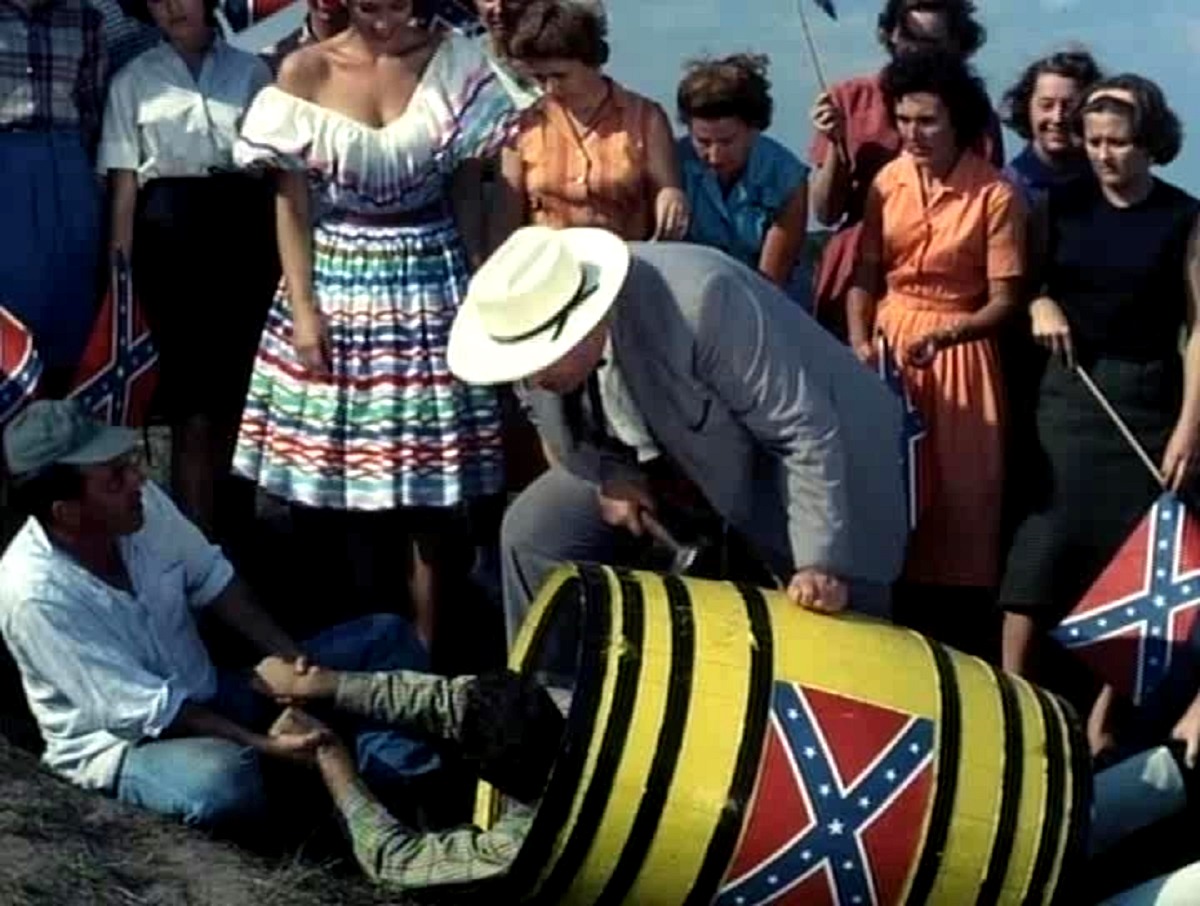
These insights can be interpreted from the themes of Two Thousand Maniacs!’s story. One of the main themes centers on revenge, with the people of Pleasant Valley capturing six people from the North. They trick them into going on a detour, buttering them up by making them the “guests of honor,” giving them free hotel rooms, and even seducing two of the tourists. All of this is done as a ploy to have the captives killed in several ways, from rolling down a hill in a barrel with sharp nails hammered into it, creating a demented version of a dunk tank where a boulder falls on the victim, to getting their arm chopped off and roasted for a barbeque. These acts are done in sadistic glee by the townspeople, who cheer and clap as the poor victims are brutally slaughtered, seeing it as compensation for being killed themselves.

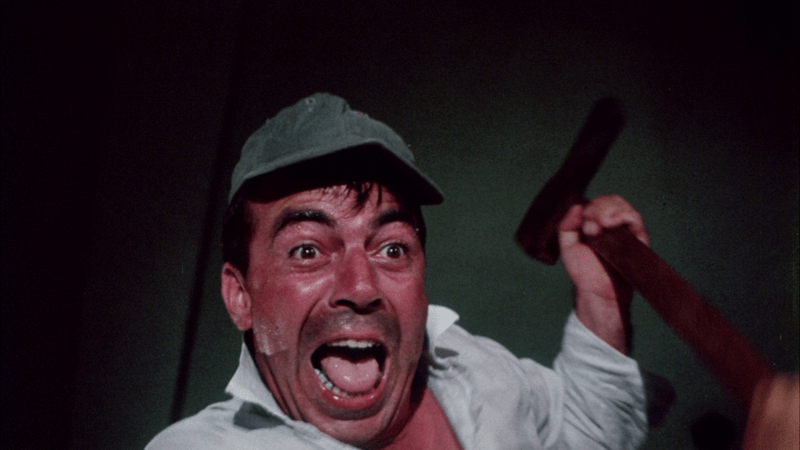
But as dark as that is, Two Thousand Maniacs! doesn’t take their vengeance that seriously. Instead, the film revels in its exploitative nature, gleefully showing how evil and crazy everyone in Pleasant Valley is to the point that it comes off as satirical. Not only do you have extras carrying around multiple Confederate flags and small nooses, but the supporting characters share more traits with caricatures of people from the South than they do being realistic. You have Rufus and Lester, two energetic rednecks who speak in cartoonish accents and wild mannerisms to the point of becoming a comedic duo if it weren’t for their bloodlust. There’s Mayor Buckman, who talks in a Foghorn Leghorn voice and acts kindly and enthusiastic to his “guests,” but secretly plans to have all six northerners killed in gruesome ways, having
Rufus and Lester help him as henchmen. There’s also Betsy and Harper, the seducers for couple Bea and John, who talk with an exaggerated accent and dialect. And then there’s Billy, a bratty kid that carries around a tiny noose and yells whenever he talks, who gets tricked into helping Tom and Terry escape the town after being offered candy. All these characters act like stereotypes instead of actual people, making them more fun to watch instead of terrifying, as if the film is making fun of them. Jacqueline Pinkowitz comments on this depiction in his article, stating that “Maniacs revels in the grossest characteristics of the Southern hillbilly, trading upon what David Bell describes as the “assorted cultural myths” which associate Southern White trash, rednecks, and rural people with “insularity, backwardness, sexual perversion (especially incest and bestiality)” and cannibalism” (Pinkowitz 116). Could their portrayals be a parody of how people perceive the South? It seems so, but they are still intimidating and creepy.
For how silly these characters are, there is still tension coming from them. The people of Pleasant Valley still hold power over the northerners, showing the one advantage they have that makes them unsettling: control. When the visitors first arrive in the town, they make sure to stop their cars and surround them so they don’t try to leave. There are even people touching them as everyone cheers at their arrival, and later laugh when Mayor Buckman says they’ll treat them with “Southern Hospitality,” eagerly messing with the northerners as their plan begins. Later, Tom tries to reach the teacher’s conference in Atlanta, which is revealed to be Buckman on the other line and pretending to be someone from the hotel, who laughs at successfully tricking him. The death scenes, no matter how wacky, still have a part where people hold down the victim and taunt them before they die. Powerlessness is shown throughout the film, with the horror coming from being trapped in a town full of people who want to kill you and do so cheerfully. It may be over-the-top, but there is a sense of menace from the citizens.
Although, the one strange exception to their evil is in a scene where the crowd reacts to John’s death from the “horse race.” The crowd goes silent, with the camera cutting to a wide shot of the crowd standing there before going into a close-up of their faces, which show guilt and unease. Any significance from this moment is thwarted by Rufus’s and Lester’s return from getting the horses, where they force the banjo players to play some music for them. What is interesting about this is that they say the line, “This is our celebration. You know what happens to anybody that backs out,” which implies that the rest are forced into taking part in the Centennial. Weirdly enough, the movie never focuses back on this, with the scene ending in everyone singing along to “Look Away Dixie Land.” Could there be any significance to take from this? Even then, it’s not like Two Thousand Maniacs! just has one pointless scene. For example, there’s a random scene of Tom and Terry washing their legs at a lake after getting away from Harper, and the camera’s focus is on Terry’s legs (probably because the actor, Connie Mason, is a Playboy model). So, with a movie that plays at being excessive, unserious, and all over the place, can there be any meaning or commentary taken from it beyond some crazy hicks’ revenge? If you think about it, yes.
Behind all the fun and tastelessness Lewis offers in this movie, there are aspects of insight that can make for an interesting analysis of what the town does. In Anthony Szczesiul’s article “Re-Mapping southern hospitality: Discourse, ethics, politics,” he points out connections between the northerners’ deaths and historical customs and backgrounds of Southern culture. For instance, based on Szczesiul’s sources, David’s death from the barrel roll was actually a way slave owners would kill slaves, citing one infamous example of Colonel McQuiller using it as a torture tactic. He even thinks Beverly’s death from the boulder “calls to mind the atmosphere of the modern ‘spectacle lynching’ described by Grace Elizabeth Hale” (Szczesiul 135). It’s interesting how there can be connections made to how historically hostile the South can be, but in a way that does not feel intentional. For all we know, Herschell Gordon Lewis just thought of these deaths without researching or tying them back to the history of the South.
However, there is consideration in how culturally relevant Two Thousand Maniacs! would be at its time of release. Released in March 1964, it not only coincided with the hundredth anniversary of the Civil War, becoming a major plot point in the film, but also came out at a time when the South was still known to be incredibly prejudiced. It was released during the height of the Civil Rights Movement, and before an infamous murder case where Civil rights activists James Chaney, Andrew Goodman, and Michael Schwerner were killed by the Ku Klux Klan in Philadelphia, Mississippi, which became a big FBI case. Lewis couldn’t have randomly thought of making a movie about murderous rednecks with events like this happening at the time, so there must be some significance going on with the plot of Two Thousand Maniacs! Szczesiul comments on these parallels as well, saying, “With this more immediate context in mind – and knowing that this violence unfolded under a national media spotlight – the film’s plot line and violence… seem somewhat less fantastic” (136). It feels like Lewis is commenting on this, showing how evil but ridiculous the deep South is, presenting it in a way that can be taken as dumb fun.
And connections aren’t just made from cultural events but customs too. The film also takes some twisted digs at popular southern traditions, like the idea of “Southern Hospitality.” The phrase is mentioned by the town constantly, although it is done ironically as they snicker every time it is said. And what they do to the visitors is clearly what Southern Hospitality is not supposed to be. The film could be saying something about this, warping one of the most positive traits of the South into a reference to violence and torture. Based on Szczesiul’s article, it was a popular phrase in travel ads in the 1960s, referring to how welcome tourists would be and that they would be taken care of. In fact, four of the people who went to Pleasant Valley were on their way to a vacation in Florida. These four people are also the ones who die, their naivety and trust in the town getting the best of them. The irony and the historic/current allusions could be a critique about the North not fully grasping the hatred and contempt of the South. Instead, the North focuses on simplistic qualities like how well the latter will treat them, especially with white Americans who may not take their racism seriously. Intended or not, the film does present this, masking the ugliness of Pleasant Valley with sarcastic kindness and “manages to conjoin contradictory images of the South in unusual ways: hospitality becomes hostility, the romance of reunion becomes repressed regional hatred, and the white visitor from the North assumes the position normally occupied by black victim” (135).
Yet, for how critical Lewis may be for showing the South in this horrific light, he still had to cater to rural audiences and drive-ins in southern states. These assumptions are probably not what he intended, but it’s impossible to not see them when thinking critically about his film. And because of the knowledge of historical violence and racism from the South, along with the people who still actively support Confederation, it provides a reason to why southerners are the subject of a flick like Two Thousand Maniacs! and why people would be afraid of them. That reason is hatred.
Herschell Gordon Lewis provides a validation in fearing the South, for despite how nice and welcoming Pleasant Valley can be, the people there will want to kill you. And not just kill you, but brutally so. It doesn’t speak to all the people in the South, but the movie comments on the darkness of this country, especially during a time where that ugliness was being shown increasingly, no matter how positive the media positively portrayed them. The book Reframing Cult Westerns talks about this, bringing up how this film came out when Hollywood westerns were all the rage. At the time, westerns typically featured plotlines of united relationships forming between the North and South, which Lewis was clearly going against. Rather than support unification, the film “comprehensively flies in the face of Hollywood’s harmonious approach and instead delights in telling a story in which old regional animosities still run deep” (Broughton 170). The movie has fun in portraying the citizens’ hatred towards others, but in the end, the hatred becomes symbolic.
In the film’s twist ending, it turns out that the town is made up of ghosts, with there being no trace of the original town, and that they plan to do the Centennial every one hundred years. It finishes with Rufus and Lester excitedly talking about what the 2065 centennial would be like before going into hibernation. At this moment, everything Pleasant Valley represents, including revenge, hatred, and violence, becomes metaphorical. The ghost town turns from physical into a dark cloud that hangs over the South, a reminder of its dark history and contempt that can never go away, only building up to the next bout of hate. It reflects how any harsh feelings that were harbored by the Confederates losing the Civil War are still there, waiting to be expressed in violence and anger. Considering the relevance of the film at the time of release, and sadly after, that message is incredibly eerie. Yet the film takes it at extreme heights, down to the theme song being a jaunty, catchy tune but includes lyrics like “The South will rise again,” which weirdly can be a symbol of the movie’s nature. You can have fun with it, but be wary of its message.
No matter if any insights made into the film were supposed the point beyond having fun with the craziness, Two Thousand Maniacs! remains an interesting exploitation flick that offers more than meets the eye. It is also a precursor to the hicksploitation and hillbilly horror films that came out later in the 60s and 70s, with films like The Texas Chainsaw Massacre (1974) and The Hills Have Eyes (1977) sharing similar themes are fearing the other and reflecting on the darkness of the South. Today, Two Thousand Maniacs! remains an iconic part of Herschell Gordon Lewis’s filmography and of the exploitation genre. And with films like this, it proves that, even if it is something that’s supposed to be schlocky fun, they can still have meaning.
Works Cited
Two Thousand Maniacs! Directed by Herschell Gordon Lewis, Box Office Spectaculars, 1964.
Broughton, Lee. Reframing Cult Westerns: From The Magnificent Seven to The Hateful Eight. Bloomsbury Publishing Inc., 2020.
Pinkowitz, Jacqueline. “Down South: Regional Exploitation Films, Southern Audiences, and Hillbilly Horror in Herschell Gordon Lewis’s Two Thousand Maniacs! (1964).” Journal of Popular Film and Television, vol. 44, no. 2, Summer 2016, pp.109-119.
Szczesiul, Anthony. “Re-mapping southern hospitality: Discourse, ethics, politics.” European Journal of American Culture, vol. 26, no. 2, Summer 2007, pp.127-141.
 Channel 31
Leave a comment