By Eli LaChance
Toho took Hollywood to school on long-running franchise movies with a fraction of the budget. After a long year of Blockbuster duds, Godzilla Minus One proves the problem isn’t inherent to franchises or genre, it’s Hollywood’s cookie-cutter approach.
With Godzilla Minus One, writer/director Takashi Yamazaki delivers a deeply emotional character-driven story set in the early days of Japan’s post-WW2 reconstruction about collective trauma, grief, shame, and regret. It’s a good movie first, and a Godzilla movie second. Not since the 1954 original has a Godzilla story been handled with such dimensionality, humanity, and horror(spoken as someone who’s enthusiastically watched all 37 Godzilla films). Dare I say, it’s one of the best giant monster movies ever made.
Kōichi Shikishima(Ryunosuke Kamiki) is a haunted man, a disgraced kamikaze pilot reeling with guilt over his abandoned mission and the lives he couldn’t save during a strange Odo Island incident following his desertion. Kōichi doesn’t feel he deserves redemption. He builds his post-war life in the shadow of destruction with a toppled and charred Tokyo providing a backdrop for his new normal. He’s hated by his country and neighbors for what they see as cowardice and is unable to forgive himself. Kōichi is still at war in his mind pressing him to deny the longing romantic tension between himself and his unlikely roommate, Noriko Oishi(Miname Hamabe), a fellow victim of war, nor will he embrace the role of father to the orphaned child, Akiko, Oishi rescued in wartime and now raises.
This film pulls Godzilla back to his roots with the tragedies that inspired the creature informing nearly every aspect. This isn’t an escapist fantasy, but a deeply allegorical and tonally dark film set before the events of 1954’s Godzilla that wants viewers to stew with the uncomfortable realities of war and disaster.
One cannot overstate the charisma imbued in Yamazaki’s beast, rendered vividly in gorgeous CGI that puts Hollywood’s higher-budget work to shame. Godzilla looks intimately real as he rises scarred and angry from the frothing ocean and fixes his gaze on the people below. Frequently viewed through a subjective lens, he seems aware, deliberate, and calculating as he plots his murderous rampage. Toho has pulled an impressive trick here making the familiar horrifying. There’s no room for sympathy toward this Godzilla. This monster is no hero.
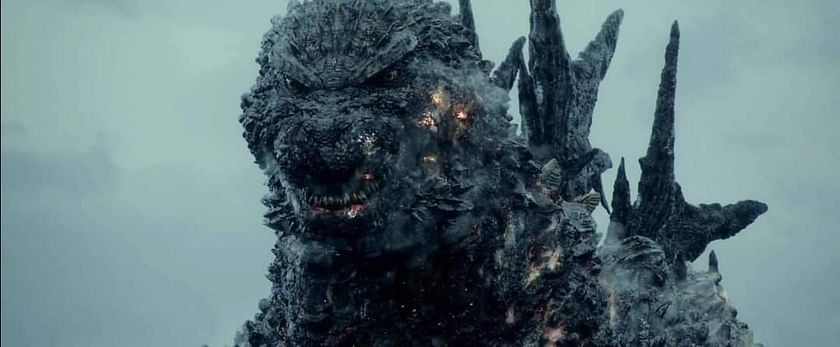
Credit: Toho
As Kōichi’s guilt and shame build, so does Godzilla’s savagery, as does the cost of his destructive acts. Gone are the wide-open framed shots of the creature’s rampages we’re familiar with. This film chooses to drop viewers directly in the action underfoot during the fight for survival. Compared to the sequels that preceeded it, it feels fresh for a Godzilla movie to concern itself so intimately with the human toll of a daikaiju attack. This is Godzilla at his most frightening, a horror film about post-war recovery. My gut lurched with each claw slash, atomic blast, and tail swing due to the dimensionality given to the characters and the intimacy of the camera.
There’s a metatextual element in a Japanese veteran punishing himself and reliving WW2 through Godzilla, the Japanese embodiment of nuclear annihilation inspired by the conflict, now able to regenerate ad infinitum; perhaps a commentary on Japan’s relationship with their most famous beast? What we get is a film that’s very critical of global superpowers, fiercely cynical towards the Japanese government, and vehemently anti-war. Kōichi’s character arc mirrors his peers, as the source of strength and healing is found through community rather than authority, resisting shades of nationalism that have plagued so many Godzilla sequels before. The result is a film that’s both dour and surprisingly uplifting. If the original Godzilla is about the dangers of nuclear war, ‘Minus One‘ is a blueprint for healing in the aftermath of not just Nuclear war, but all disasters caused by humanity’s destructive nature.
I expect a sleeper hit, likely to draw in even the most resistant to the daikaiju-eiga genre. I saw it in a packed cinema of awestruck Godzilla fans on a Wednesday afternoon frenzied by early buzz and glowing reviews. Godzilla fever is catching. The 37th time is the charm, I suppose. GODZILLA MINUS ONE hits theaters today. Long live the king.
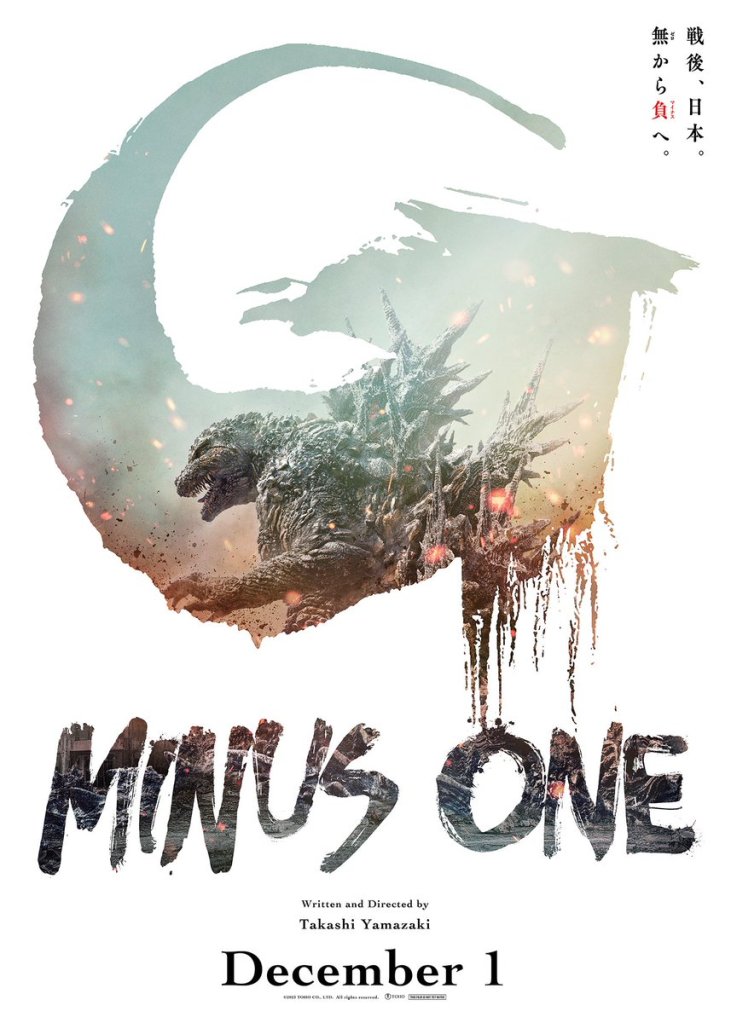
 Channel 31
Leave a comment